
Have you been hearing the term “What is Web 3.0 – The Future of the Internet” and still feel unsure what it really means? Some call it the next big shift in the online world, while others say it will completely change how we use the internet.
But what exactly is it, how does it work, and why is everyone talking about it?
Table of Contents
In this guide, we will break it down in simple words, explore its features, benefits, challenges, real-life examples, and what it could mean for the future.
What is Web 3.0?
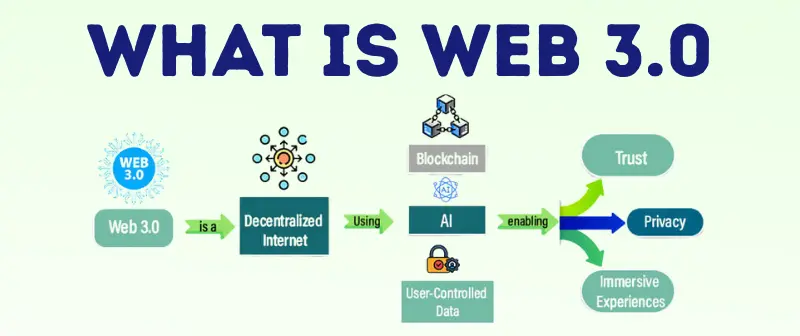
Web 3.0 is the next stage of the internet where people can own and control their own data instead of big companies. It uses new technology like blockchain, artificial intelligence, and the semantic web to make the internet smarter, safer, and more open.
In Web 1.0, the internet was just for reading information. In Web 2.0, people could read, write, and share content through social media and apps, but big platforms owned the data. In Web 3.0, people can read, write, and own their data, digital assets, and online identity.
Its main traits are decentralization (no single company controls everything), blockchain (secure, transparent system), semantic web (machines understand data better), and AI (smarter and faster online services).
How Web 3.0 Works?
Here’s how Web 3.0 works and what makes it different from the internet we use today:
- Blockchain and Smart Contracts – Information and transactions are recorded on blockchain networks. Smart contracts automatically carry out agreements without needing a middleman.
- Cryptocurrencies and Tokens – Digital money and tokens are used for payments, rewards, and ownership of assets online.
- Peer-to-Peer Networks – Data is shared directly between users instead of being stored on a company’s central server.
- Decentralized Applications (dApps) – Apps run on blockchain, giving users control over their data and removing the need for a single company to operate them.
- Machine Understanding – The semantic web and AI allow computers to understand data better, giving more accurate search results and recommendations.
Evolution of the Internet: From Web 1.0 to Web 3.0
The internet has gone through big changes over the years, moving from a simple information tool to an interactive and now ownership-driven space. Here’s how it evolved:
Web 1.0 – Read Only
- Started in the 1990s.
- Websites were static, with plain text and images.
- You could only read information, not interact or share.
Web 2.0 – Read and Write
- Came in the early 2000s.
- Social media, blogs, and apps allowed people to share and create content.
- Companies like Facebook, Google, and YouTube collected and controlled user data.
Web 3.0 – Read, Write, and Own
- The current and upcoming phase.
- Built on decentralization and blockchain.
- People own their data, digital assets, and identity without depending on big corporations.
Web 1.0 gave us access to information, Web 2.0 connected us socially, and Web 3.0 is putting power and control back into the hands of users.
Key Features of Web 3.0
Here are some of the major features that make Web 3.0 different from earlier versions of the internet:
- Decentralization – No single company or authority controls the data. Information is stored across many computers, making it harder to censor or manipulate.
- Blockchain Technology – Uses a secure and transparent system where all transactions are recorded and verified, reducing fraud and increasing trust.
- Semantic Web – Organizes data in a way that machines can “understand,” allowing for more accurate and meaningful search results.
- Artificial Intelligence – Helps deliver personalized, precise, and predictive online experiences by analyzing data quickly.
- Interoperability – Apps, websites, and platforms can connect and work with each other without barriers.
- User Ownership – People have full control over their personal data, online identity, and digital assets instead of giving that control to corporations.
Advantages and Disadvantages of Web 3.0
Here are the major pros and cons of Web 3.0:
Benefits of Web 3.0
Here are some of the major advantages of Web 3.0:
- Data Privacy and Security – Users keep control of their personal data, reducing the risk of misuse or unauthorized access.
- No Single Point of Failure – Since data is stored across many computers, the system is less likely to crash or be taken down.
- Fair Monetization for Creators – Artists, writers, and developers can earn directly from their audience without depending on middlemen or big platforms.
- Global Access Without Restrictions – Anyone with an internet connection can use Web 3.0 services, no matter where they are in the world.
Challenges and Limitations of Web 3.0
While Web 3.0 offers many benefits, it also faces some challenges:
- Technical Complexity for Beginners – The use of blockchain, wallets, and tokens can be confusing for people new to the technology.
- Scalability and Speed Issues – Some blockchain networks process transactions slowly, making it hard to handle large numbers of users at once.
- Lack of Clear Regulations – Governments are still figuring out how to regulate Web 3.0, which creates uncertainty for businesses and users.
- Risk of Scams in Crypto-Based Systems – Fraud, fake projects, and hacking remain concerns, especially in cryptocurrency and NFT markets.
Real-World Examples of Web 3.0
Here are the examples of how Web 3.0 is already being used today:
- Cryptocurrencies – Digital money like Bitcoin and Ethereum that works without banks or central authorities.
- Decentralized Finance (DeFi) – Platforms that let people lend, borrow, and trade directly with each other without traditional banks.
- NFTs – Unique digital collectibles and artworks stored on blockchain, proving ownership and authenticity.
- Decentralized Social Media – Platforms like Lens Protocol or Mastodon that give users control over their accounts and content.
- Metaverse Projects – Virtual worlds like Decentraland and Sandbox where people can buy land, create businesses, and interact in 3D spaces.
Impact of Web 3.0 on Industries
Web 3.0 is changing many industries by offering new ways to work, earn, and connect. Here are some key examples:
- Finance – Decentralized finance (DeFi) is offering banking services like loans and trading without traditional banks.
- Gaming – Play-to-earn games let players earn real money or digital assets while they play.
- Content Creation – Artists and creators use NFTs and special platforms to own and sell their work directly to fans.
- Healthcare – Patients and doctors can securely share medical records using decentralized systems.
- Education – Decentralized platforms provide new ways to learn, share knowledge, and earn certificates without middlemen.
The Future of Web 3.0
Web 3.0 has the potential to create a fully decentralized internet where users have full control over their data and online activities. As artificial intelligence becomes more advanced, it will work together with Web 3.0 to provide faster, smarter, and more personalized web services.
Experts predict that in the next ten years, Web 3.0 will grow widely, changing how we live and work. It could reshape jobs, create new business models, and change daily life by making the internet more open, fair, and user-focused.
Conclusion
So guys, in this guide we have covered What is Web 3.0 The Future of The Internet in simple and clear terms. I suggest closely monitoring this technology as it will transform our internet usage and our ability to manage our online data.
If you want to learn more about related topics like blockchain, cryptocurrencies, or how to start using Web 3.0 tools, just comment below. I’ll be happy to help you out!
FAQs
Here are some of the most commonly asked questions related to Web 3.0:
1. Is Web 3.0 already here?
Web 3.0 is still developing, but many parts are already available. Cryptocurrencies, NFTs, and decentralized apps are examples you can use now. However, the full vision of Web 3.0 will take time to become common for everyone.
2. Will Web 3.0 replace the current internet?
Web 3.0 will not replace the internet overnight. It will grow alongside the current web and slowly change how things work. Over time, more people and companies may switch to Web 3.0 technologies.
3. Do I need cryptocurrency to use Web 3.0?
Not always, but many Web 3.0 apps use cryptocurrencies or tokens for payments and access. You can explore some Web 3.0 features without crypto, but having some digital currency helps to get the full experience.
4. How can I start exploring Web 3.0 today?
You can start by creating a digital wallet and trying out simple apps like decentralized social media or NFT marketplaces. Learn about blockchain basics and use beginner-friendly platforms. Start small and explore safely.
5. Is Web 3.0 safe for everyone?
Web 3.0 offers better security and privacy, but it also has risks like scams and hacking. Beginners should be careful, use trusted platforms, and learn how to protect their accounts and assets. Safety improves as technology and rules develop.