
Machine learning is changing the world fast. In this article, we will explore the 20 Top Applications Of Machine Learning That Are Changing The World today. These applications are making our lives easier, smarter, and more efficient.
From healthcare to entertainment, machine learning is everywhere. Let’s look at how these 20 powerful uses of machine learning are shaping the future.
Table of Contents
How Machine Learning is Revolutionizing Technology
Guys, before moving forward, here are some important things you must know about how machine learning is changing technology:
- Machine learning helps automate tasks and makes smart systems work better.
- It improves how we make decisions by analyzing data quickly.
- Machine learning is growing fast and is used in many different industries.
Criteria for Selecting These 20 Applications
Before sharing the 20 Top Applications Of Machine Learning That Are Changing The World, here’s how we selected them:
- They are important and have a clear impact on daily life or business.
- They bring new technology and improve the way things are done.
- They are already used in many places and have strong potential for the future.
Top Applications of Machine Learning
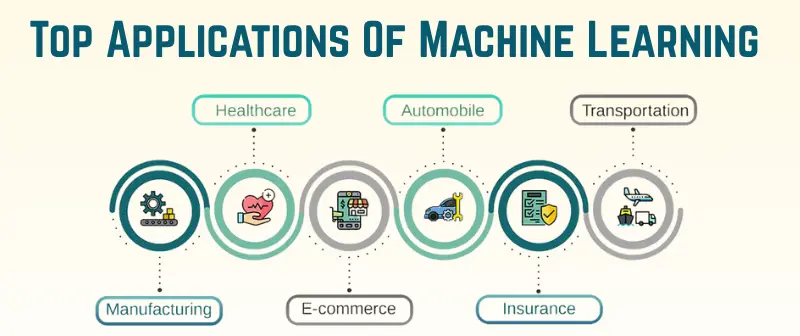
So, here are the top 20 applications of machine learning that are changing the world:
- Healthcare and Medical Diagnosis
- Autonomous Vehicles
- Natural Language Processing (NLP)
- Fraud Detection
- Recommendation Systems
- Predictive Maintenance
- Image and Speech Recognition
- Customer Service Automation
- Financial Trading
- Agriculture and Crop Monitoring
- Smart Home Devices
- Cybersecurity
- Education and Personalized Learning
- Marketing and Customer Insights
- Supply Chain and Logistics
- Energy Management
- Entertainment and Gaming
- Environmental Protection
- Human Resources and Recruitment
- Drug Discovery and Development
Let’s now look at each of these applications in detail.
1. Healthcare and Medical Diagnosis
Machine learning is helping doctors work faster and more accurately. It can study medical reports, test results, and images to find health problems early. Doctors use it to spot patterns that are hard to see with the human eye.
This means diseases like cancer or heart problems can be found sooner. Early detection gives patients a better chance of recovery.
Examples of ML in healthcare:
- Detecting cancer from X-rays and MRI scans.
- Predicting heart attack or stroke risk from patient data.
- Creating treatment plans based on a patient’s history.
- Monitoring patients at home through smart health devices.
- Tracking and predicting disease outbreaks.
2. Autonomous Vehicles
Machine learning plays a big role in self-driving cars and drones. It helps them understand their surroundings through cameras, sensors, and maps. The system learns to spot traffic signs, detect obstacles, and follow safe routes.
This makes travel safer and reduces human driving errors. Many companies are testing these vehicles for public roads and delivery services.
Examples of ML in autonomous vehicles:
- Reading traffic signs and signals.
- Detecting pedestrians, cyclists, and other vehicles.
- Planning safe and efficient driving routes.
- Avoiding accidents by predicting movements of others.
- Assisting drivers with parking and lane-keeping.
3. Natural Language Processing (NLP)
Natural Language Processing helps machines understand and work with human language. It powers tools like voice assistants, chatbots, and translation apps. With NLP, computers can read text, listen to speech, and respond in a way people understand.
This makes it easier to search for information, get customer support, or communicate across different languages. Many apps we use daily rely on this technology.
Examples of ML in NLP:
- Voice assistants like Siri, Alexa, and Google Assistant.
- Translating text between languages.
- Chatbots that answer customer questions.
- Summarizing long articles into short notes.
- Detecting emotions or sentiment in messages.
4. Fraud Detection
Machine learning is helping banks and businesses stop fraud before it causes damage. It studies transaction patterns to spot unusual or suspicious activity. This can include stolen credit card use, fake accounts, or online payment scams.
The system can check thousands of transactions in seconds, making it much faster than manual checks. This protects both companies and customers from losing money.
Examples of ML in fraud detection:
- Detecting unusual spending on credit cards.
- Blocking fake or stolen online accounts.
- Spotting false insurance claims.
- Identifying suspicious bank transfers.
- Warning users about unsafe online transactions.
5. Recommendation Systems
Recommendation systems help users find what they might like based on their past choices. They are used in shopping sites, streaming platforms, and social media. The system looks at your history and compares it with similar users to suggest products, movies, music, or content.
This makes it easier for people to discover new things without searching too much. Businesses also use recommendations to increase sales and user engagement.
Examples of ML in recommendation systems:
- Suggesting movies or shows on Netflix.
- Showing similar products on Amazon.
- Recommending songs on Spotify or YouTube.
- Suggesting friends or connections on social media.
- Showing articles or posts based on your interests.
6. Predictive Maintenance
Predictive maintenance helps companies fix machines before they break down. Machine learning studies data from sensors, past repairs, and machine performance. It can spot signs of wear and warn when a part might fail.
This saves money, avoids sudden breakdowns, and keeps work running smoothly. It’s widely used in factories, airlines, and transport services.
Examples of ML in predictive maintenance:
- Checking airplane engines for early signs of damage.
- Monitoring factory machines for unusual vibrations or noise.
- Predicting when vehicle parts need replacement.
- Reducing downtime in manufacturing plants.
- Planning maintenance schedules more efficiently.
7. Image and Speech Recognition
Image and speech recognition help computers understand pictures, videos, and spoken words. Machine learning teaches systems to identify faces, read text from images, or convert speech into written words.
This technology is now common in smartphones, security systems, and voice assistants. It makes interactions with devices more natural and secure.
Examples of ML in image and speech recognition:
- Unlocking phones using face ID.
- Converting spoken words into text with Google Voice Typing.
- Detecting objects in self-driving cars.
- Reading license plates for security purposes.
- Translating spoken language in real time.
8. Customer Service Automation
Customer service automation uses machine learning to help businesses answer customer questions faster. Chatbots, voice bots, and automated email replies can handle common queries without human help.
The system learns from previous conversations to improve responses over time. This reduces wait times and improves customer satisfaction.
Examples of ML in customer service automation:
- Chatbots answering questions on websites.
- Virtual assistants helping with online orders.
- Automated responses to common support emails.
- Voice bots assisting in call centers.
- AI-powered FAQs that give instant answers.
9. Financial Trading
Machine learning is used in financial trading to predict market trends and make faster investment decisions. It analyzes huge amounts of market data, news, and economic indicators to spot opportunities or risks. Traders and investment firms use these predictions to plan smarter strategies.
Examples of ML in financial trading:
- Predicting stock price movements.
- Detecting unusual market patterns.
- Automating buy/sell orders.
- Analyzing company performance reports.
- Managing investment risks.
10. Agriculture and Crop Monitoring
Machine learning helps farmers monitor crop health, predict yields, and manage resources like water and fertilizer. Drones, sensors, and satellites collect data, and ML analyzes it to improve farming efficiency and reduce waste. This results in better harvests and sustainable agriculture.
Examples of ML in agriculture:
- Detecting crop diseases early.
- Predicting weather for farming activities.
- Optimizing irrigation schedules.
- Monitoring soil quality.
- Estimating crop yield.
11. Smart Home Devices
Smart home devices use machine learning to understand user habits and make life easier. They learn patterns like when you turn on the lights, adjust the thermostat, or play music, and then automate those tasks for you. This creates a more comfortable and energy-efficient home.
Examples of ML in smart homes:
- Adjusting room temperature automatically.
- Recognizing voice commands.
- Suggesting music or shows based on your taste.
- Detecting unusual movement for security.
- Controlling appliances remotely.
12. Cybersecurity
Cybersecurity is becoming more advanced with the help of machine learning. Instead of relying only on fixed rules, ML systems learn from past cyberattacks, suspicious activities, and user behavior patterns to detect threats in real time.
This means they can catch new, unknown attacks before they cause serious damage. Companies use ML-based security to protect their networks, data, and customers around the clock.
Examples of ML in cybersecurity:
- Detecting and blocking phishing attempts.
- Spotting unusual login locations or times.
- Automatically identifying and isolating malware.
- Analyzing large volumes of network traffic for threats.
- Predicting attack patterns before they happen.
13. Education and Personalized Learning
Machine learning is reshaping education by creating a learning experience that adapts to each student. Instead of a one-size-fits-all approach, ML tools can track how students perform, identify their strengths and weaknesses, and adjust lessons accordingly.
This keeps learners engaged, ensures better understanding, and helps teachers focus on where support is most needed.
Examples of ML in education:
- Recommending lessons based on learning pace.
- Giving instant feedback on assignments and quizzes.
- Detecting when a student is struggling with a topic.
- Automating grading to save teachers time.
- Creating engaging, interactive learning activities.
14. Marketing and Customer Insights
In marketing, machine learning acts like a powerful detective, studying customer habits, preferences, and interactions.
It helps brands understand what people want and when they want it, so they can create more relevant ads, personalized recommendations, and engaging content. This not only improves sales but also builds stronger relationships with customers.
Examples of ML in marketing:
- Predicting what products customers will buy next.
- Recommending items based on browsing history.
- Grouping customers into segments for targeted ads.
- Tracking online reviews to gauge brand sentiment.
- Automating and personalizing email campaigns.
15. Supply Chain and Logistics
Managing supply chains can be complex, but machine learning makes it easier and faster.
By analyzing sales trends, traffic patterns, and shipping data, ML can predict demand, choose the fastest delivery routes, and prevent stock shortages. Businesses save time, reduce costs, and ensure products reach customers without delays.
Examples of ML in supply chain:
- Forecasting product demand for each season.
- Planning efficient delivery schedules and routes.
- Monitoring inventory in real time.
- Detecting shipment delays before they escalate.
- Reducing fuel and transportation costs.
16. Energy Management
Machine learning is helping the world use energy more efficiently. It can study electricity usage patterns, weather forecasts, and market prices to decide the best times to produce, store, and use energy.
This not only cuts costs but also supports renewable energy sources like solar and wind, making power grids more stable and sustainable.
Examples of ML in energy management:
- Predicting peak electricity demand hours.
- Optimizing heating and cooling in buildings.
- Managing energy storage in batteries.
- Balancing renewable and traditional energy supply.
- Reducing waste in industrial energy consumption.
17. Entertainment and Gaming
In entertainment and gaming, machine learning adds realism, personalization, and excitement. It can recommend movies, music, and games you’ll enjoy based on your past choices.
In gaming, ML powers smarter opponents, more lifelike animations, and adaptive challenges that keep players engaged for longer.
Examples of ML in entertainment:
- Recommending shows and music playlists.
- Generating realistic in-game characters.
- Adjusting game difficulty based on player skill.
- Analyzing audience preferences for new content.
- Creating interactive storylines in games.
18. Environmental Protection
Machine learning is playing a big role in protecting the planet. It can process satellite images, weather data, and pollution levels to detect problems early and suggest solutions.
From tracking deforestation to predicting natural disasters, ML helps environmental experts make faster and more accurate decisions.
Examples of ML in environmental protection:
- Detecting illegal logging from satellite data.
- Predicting floods, storms, or wildfires.
- Monitoring air and water quality.
- Identifying endangered species in photos.
- Optimizing waste management processes.
19. Human Resources and Recruitment
Hiring the right people is easier with machine learning. It can scan resumes, analyze skills, and even predict which candidates are most likely to succeed in a role.
This saves time for HR teams and ensures fair, data-driven hiring decisions. ML also helps monitor employee satisfaction and improve retention.
Examples of ML in HR and recruitment:
- Filtering resumes for relevant skills.
- Predicting candidate success rates.
- Automating interview scheduling.
- Analyzing employee feedback for improvements.
- Reducing bias in recruitment processes.
20. Drug Discovery and Development
In healthcare, machine learning speeds up the search for new medicines. By analyzing huge amounts of chemical and biological data, ML can identify promising drug candidates much faster than traditional methods. This shortens development time and helps bring life-saving treatments to patients sooner.
Examples of ML in drug discovery:
- Predicting how drugs will interact with the body.
- Finding new uses for existing medicines.
- Screening millions of chemical compounds quickly.
- Identifying potential side effects early.
- Optimizing clinical trial designs.
How These Applications Impact Our Daily Lives?
Machine learning is part of our daily routine, even if we don’t notice it. It helps us shop smarter, travel safer, work faster, and enjoy better services.
Examples of impact:
- Saves time by automating tasks.
- Keeps us safe with better health checks and fraud alerts.
- Makes life easier through personalized suggestions.
- Cuts costs by using resources wisely.
- Helps nature by tracking and reducing waste.
In short, ML works quietly in the background but changes a lot in the way we live.
Challenges & Ethical Considerations
While machine learning brings many benefits, it also has some challenges we can’t ignore.
Key concerns:
- Bias in data can lead to unfair results.
- Privacy risks when personal data is misused.
- Job changes as automation replaces some roles.
- Security threats if systems are hacked.
- Lack of transparency in how AI makes decisions.
We need clear rules and responsible use to make sure ML helps people without causing harm.
Final Thoughts
In this guide, we have covered 20 top applications of machine learning and how they are shaping our world. From healthcare to entertainment, ML is making life easier, smarter, and faster.
The future will bring even more powerful AI tools, better decision-making, and new ways to solve global problems. But we must also use them responsibly and keep ethics in mind. That’s all for now — keep exploring, stay curious, and goodbye!
FAQs
Here are some of the most commonly asked questions related to machine learning applications:
1. What real-world applications use machine learning today?
Today, machine learning powers many everyday tools and services. It helps doctors spot diseases early and makes our travel safer with smart driving tech. It also recommends shows, spots fraud, and helps farmers grow more food. These applications make things faster, smarter, and more personal.
2. How does machine learning improve healthcare and diagnosis?
It studies medical scans, test results, and patient stories to catch health problems sooner than before. This early insight lets doctors act faster to help people. Machine learning supports decisions and lowers mistakes. It leads to better treatment plans and better healing chances. Patients get care more quickly and accurately, saving lives.
3. How do recommendation systems use machine learning?
They look at what you’ve watched, bought, or liked in the past. Then they suggest things you might enjoy—movies, products, or music. Over time, they learn your taste and get better at recommendations. That means you spend less time searching and more time enjoying what you love.
4. Why is machine learning important in fraud detection?
It watches patterns in spending, emails, and logins to find suspicious activity instantly. When something seems odd, it raises an alert before harm happens. It helps keep your money and personal data safe. Companies and banks use this to stop fraud in real time.
5. Can machine learning help in education and learning?
Yes! It watches how students study, where they struggle, and how they improve. Then it suggests lessons and exercises just for them. This makes learning faster, clearer, and more fun. Teachers get help spotting students that need extra support.
6. How does machine learning support smarter energy use?
It tracks energy use and learns patterns for homes, cities, and factories. Then it helps decide when to use, save, or store energy. This reduces waste and lowers bills. It also makes it easier to use clean energy like solar or wind.
7. What role does machine learning play in protecting the environment?
It checks satellite photos, weather, and pollution data to see risks early. It helps predict floods, track deforestation, or spot endangered species. This gives scientists tools to act faster. Smarter data leads to smarter protection of our planet.